Must Needs Go
John 4:1-42
The King James Version says it plainly: "And he must needs go through Samaria."
John mentions it almost in passing. Jesus is traveling from Judea to Galilee. He goes through Samaria. But that detail is not as simple as it sounds. Jews did not go through Samaria. They went around it — a longer route, chosen deliberately, to avoid people they had decided were not worth the trouble.
Jesus took the shorter road. And it was not an accident.
He had an appointment.
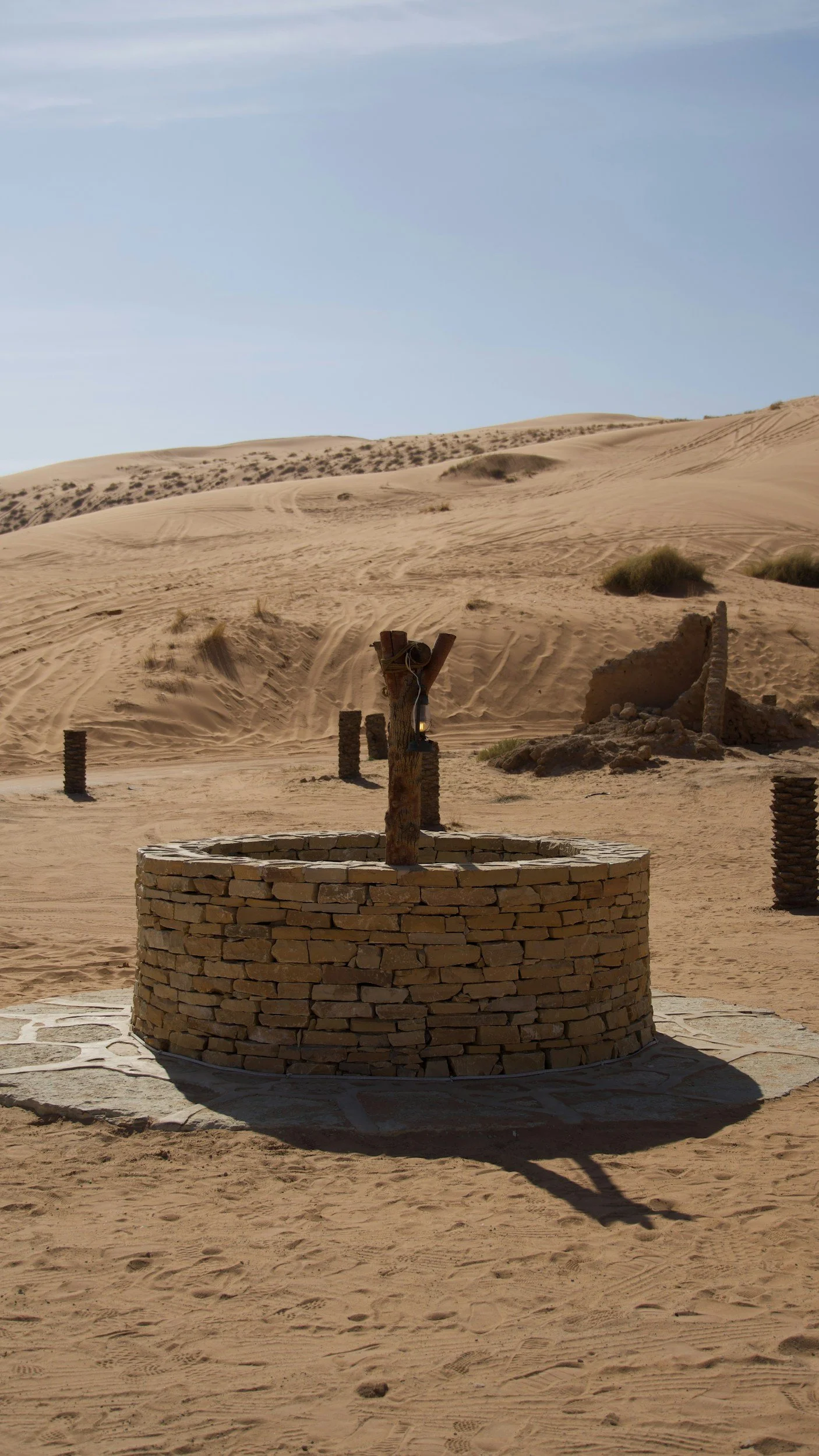
She arrives at the well at noon. Alone.
That is not a stray detail. Women drew water in the cool of the morning, together. The well was social — the place where you caught up, where you belonged. But this woman comes at midday, in the heat, by herself.
She has arranged her entire life around not being seen.
Noon is her strategy.
And Jesus is sitting there.
What follows is one of the longest personal conversations Jesus has with anyone in the Gospels. He asks for water. She is stunned. He offers her living water. She hears him literally. And then the conversation turns.
Go, call your husband.
I have no husband.
You are right. You have had five husbands, and the man you now have is not your husband.
He does not lecture her. He does not shame her.
He does not make her sin the subject of the conversation. He simply shows her:
I see you. All of you. And I'm still here.
She does not run. She leans in. She has spent her whole life being known for the worst thing about her. And for the first time, being known does not feel like a verdict. Something shifts in her — not resolve exactly, not courage. Something closer to astonishment. She was undone. And what spills out of an undone person is not a decision. It is testimony.
She left her water jar. She went back into town. And she said: Come, see a man who told me everything I ever did. She didn't work up the courage to witness. She was so astonished she couldn't stop talking.
Just then, the disciples returned. Surprised to find him talking with a woman. Holding their groceries.
They are not bad people. They are not hostile. They were doing practical, reasonable things — while Jesus was having the most important conversation in the Gospel of John with a woman they never would have spoken to.
I have spent much of my ministry like this. Willing to help whoever comes by. Waiting for the hurting to find me. It is a convicting text for a pastor — and maybe for a church — because Jesus did not wait for her.
He rearranged his route. He had to go.
That said, crowds found Jesus too. People grabbed him as he walked by. The point is not a rigid rule but a posture: the deliberateness of the appointment. The willingness to take the road through Samaria when everything in you would rather go around.
There are two people in this story, and most of us are one of them.
If you are the woman — if you have arranged your life around not being seen, if noon at the well is where you live — then the ancient poet has something to say to you: "You have searched me, Lord, and you know me. You know when I sit and when I rise" (Psalm 139:1–2, NIV). You are not hidden. You are not forgotten. You are known — not as a verdict, but as an invitation. He must needs come to where you are.
If you are the disciples — and I suspect most of us in the church are, most of the time — then somewhere near you is a village full of people who have never been told that someone knows everything they ever did and stayed anyway.
They are not going to walk into our building at 11 o'clock on Sunday morning.
We must needs go.