Do You Look Like Him Yet?
Discipleship has a measure. It's the one we keep forgetting.
REFLECTION · JUNE 21, 2026
There are dozens of ways we measure spiritual growth. We count things we can see. Attendance. Knowledge of Scripture. Years of faithful service. Whether you can teach a class, lead a study, articulate the faith to someone outside it. We measure giving, we measure showing up, we measure the visible markers of a life that has been at this for a while.
All of those things are real. None of them is the measure.
In Matthew 10, Jesus is preparing the Twelve for the cost of being sent out. He warns them, near the start of the discourse, that the student is not above the teacher. And near the end, he says something that sounds, in English, like a grade: whoever does not take up their cross and follow me is not worthy of me.
Not worthy. It lands like a verdict. Like Jesus is measuring us and we have come up short.
The Greek tells a different story. The word is ἄξιος (axios). It does not mean "good enough." It means of corresponding weight. It carries the picture of a scale — two pans, two sides, two things being compared for equivalence. Two things that match.
The disciple who refuses to take up the cross isn't failing a moral test. He doesn't correspond to the Master who did. There is a mismatch of weight. He does not yet bear the family resemblance.
That is the measure. Not knowledge. Not tenure. Not visible activity. Resemblance.
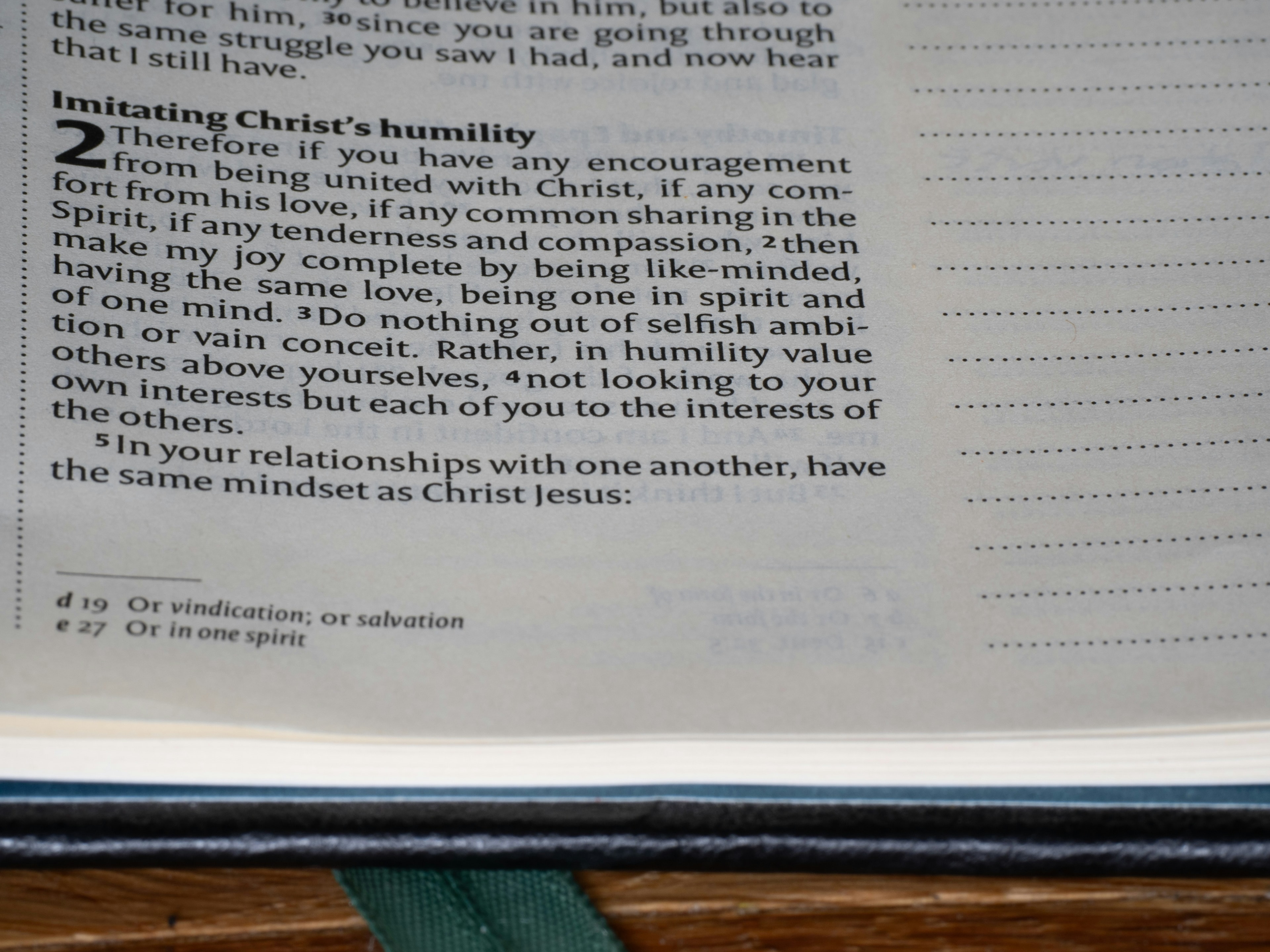
Paul says the same thing in a different voice. In Philippians 2 — under the heading Imitating Christ's Humility — he writes that we should have the same mindset as Christ Jesus. The shape of the disciple's mind is the shape of the Master's mind. The descent of Christ becomes the descent of the one who follows him. The mind that emptied itself becomes the mind formed in us. Same idea as Matthew 10, said apostolically: your life is meant to take His shape.
And that is the measure we keep forgetting.
We forget it not because we don't believe it. Most of us, if asked, could name it. We forget it because it cannot be tracked the way the other measures can. You can put a number next to attendance. You can put a number next to giving. You cannot put a number next to resemblance. Resemblance is slow, hidden, mostly invisible to the one being formed. It does not produce a report.
So the measures we can count tend to take over. Not because anyone decided they should. Because they are easier to see.
And here is the danger. A life can accumulate the visible markers of discipleship — the years, the knowledge, the activity — and still not bear the resemblance. You can know Scripture well and not look like the Christ it points to. You can be at this for decades and still be the same person inside. The measures we can count tell us we are growing. The measure we forget tells the truth.
"What would change if resemblance were the actual measure?"
If, when someone asked "how is your faith?", we did not answer with what we know or how long we have been at it, but with the question Jesus seems to be asking — do I look more like Him this year than last?
That question is harder. It cannot be answered with numbers. It can only be answered honestly, in the company of people who know you well enough to say. It is the question a spouse can answer. The question your children can answer. The question the people who work with you, live with you, see you on a Tuesday afternoon, can answer better than you can.
It is also the question the means of grace are designed to address. Prayer, Scripture, the sacraments, the disciplines of the spiritual life — these are not techniques for accumulating spiritual data. They are the conditions under which a life slowly takes the shape of another life. Wesley understood this. The whole Methodist tradition of the means of grace assumes that the goal is not information but formation. Not knowledge about Christ, but the slow conforming of one life to another.
That is what Jesus is reaching for in Matthew 10. That is what Paul is naming in Philippians 2. Have the same mindset. Be of corresponding weight. Bear the resemblance.
We have been graded all our lives by measures that can be counted. Most of those measures are not wrong. They are just not first.
The first question is the one we keep forgetting to ask.
Do you look like Him yet?