They Asked "Who Is This?" — The Answer Will Surprise You
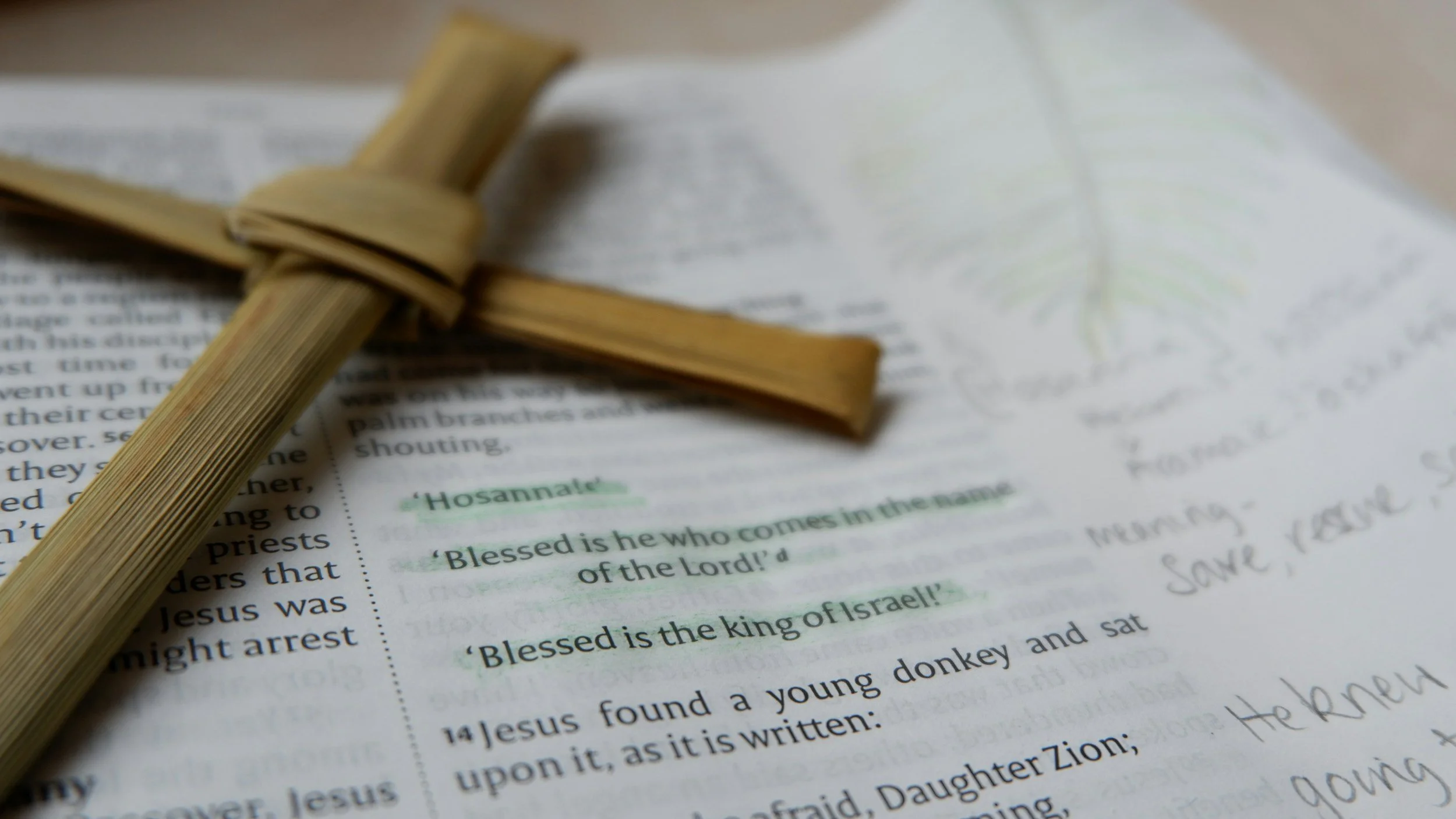
There is a moment in Matthew's account of Palm Sunday that gets swallowed by the pageantry. The crowd is shouting. Cloaks are spread on the road. The whole city of Jerusalem — Matthew uses eseisthē [ἐσείσθη] Greek: eh-SEES-thee, the word for earthquake — is shaken to its foundations. And out of that shaking, one question rises:
"Who is this?"
It is the right question. It may be the only question that finally matters. And the crowd riding in with Jesus is ready with an answer.
"This is the prophet Jesus, from Nazareth of Galilee."
Here is what is remarkable about that answer: it is not wrong. Jesus was from Nazareth. He did the things prophets do — he spoke God's word, confronted power, called people back to God. The crowd was not being dismissive. They were being reverent, in the way that people are reverent when they are in the presence of something they cannot quite name.
But they stopped too soon.
J.B. Phillips wrote a small book in 1952 — barely a hundred pages — called Your God Is Too Small. His diagnosis was not that modern people had abandoned faith. It was that they had downsized it. They had taken the Lord of heaven and earth and fitted him into a category they could manage. A category that didn't ask too much. A category they could admire from a safe distance without being required to surrender anything.
Prophet is exactly that kind of category.
You can respect a prophet. You can quote a prophet. You can build a theology around a prophet's teachings and call yourself his follower without ever falling at his feet. A prophet, after all, only speaks for God. The prophet's posture is always derivative — "Thus saith the Lord." The prophet points away from himself toward the one who sent him.
Jesus does not do this.
Read the Sermon on the Mount carefully. Over and over, Jesus says: "You have heard it said — but I say to you." No prophet in Israel's history ever spoke that way. Moses said, "The Lord your God commands you." Isaiah said, "The word of the Lord came to me." Jesus says, "I'm telling you." That is not a prophet's posture. That is the posture of the one the prophets were sent to announce.
C.S. Lewis identified the problem with the comfortable middle ground in Mere Christianity. He was trying, he wrote, to prevent anyone from saying the really foolish thing people often say about Jesus — that they are ready to accept him as a great moral teacher but not as God. Lewis said that is the one thing we must not say. A man who said the things Jesus said is either a lunatic, or the devil of hell, or exactly who he claimed to be. Liar, lunatic, or Lord. He has not left a comfortable middle ground open to us. He did not intend to.
The crowd on Palm Sunday gave the best answer they had. They were not cynics — they were people who had watched Jesus heal the sick, open blind eyes, and call a dead man out of his tomb. They knew something extraordinary was happening. They just couldn't bring themselves to say the whole thing out loud.
So they said prophet. And they were not wrong. They were just not far enough.
Palm Sunday is the day the question comes riding into town on a donkey. The city goes seismic. And the question hangs in the air over everything that follows — the Upper Room, the garden, the trial, the cross, the empty tomb.
Who is this?
The crowd's answer, true as far as it went, could not carry the weight of what was coming. Prophet from Nazareth does not get you to the cross. It does not get you to the resurrection. It does not get you to the throne.
Zechariah saw him coming centuries before: "See, your king comes to you, gentle and riding on a donkey." Not a prophet on an errand. A king taking his throne — by way of a cross.
He is not the prophet. He is the one the prophets pointed to. He is not merely the teacher. He is the truth the teachers were reaching for. He is Lord. Son of God. Savior. The Suffering Servant who became our substitute.
The question Jerusalem asked on Palm Sunday is still being asked. It echoes through every generation, every culture, every person who has ever stood at the edge of faith and wondered whether to go further.
Don't settle for a partial answer. The full answer will cost you everything.
It is also the only answer that will save you.